
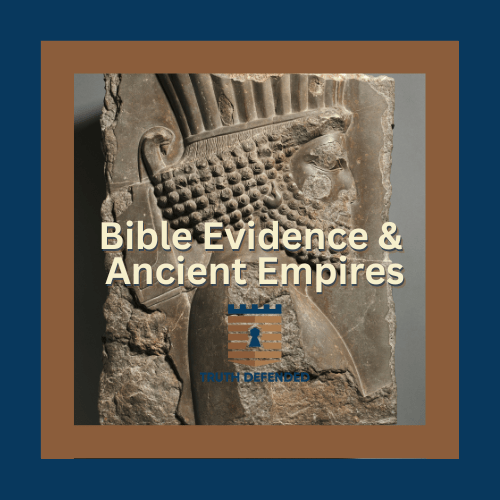
Located in the Cleveland Museum of Art is a 2500-year-old stone relief about a character written in Daniel and Esther’s Bible books. Xerxes, otherwise known as Ahasuerus, was a monarch of the global empire known as Persia. Daniel served his father, Darius, by providing dream insight and messages from Jehovah. This Darius is the same Darius who threw Daniel into the Lion’s Den after being scammed into punishing anyone praying to someone other than the king (see Daniel 6). While some historians claim that Darius the Mede in Daniel 11:1 is a fictional character, it is clear that Daniel knew him. It makes sense for Daniel to call him the King of Babylon when his nation took Babylon over and ruled it from 522 BCE until he died in 486 BCE.[1] Darius the Mede is Darius the Great.
A succession of empires begins with the famous Nebuchadnezzar (Daniel 1-4). Following the Babylonian Empire are the Medes and then the Persians. Cyrus the Great (also known as the King of Persia, Dan. 10:1) established a global empire rooted in Persia. Google AI summarizes this new empire, saying, “The Achaemenid Empire, also known as the Persian Empire, conquered Babylon in 539 BCE, ending the Neo-Babylonian Empire. The conquest was led by King Cyrus the Great, who united Babylon with the rest of his empire to create the world’s first superpower.”[2] Cyrus was considerate of the Hebrew people, as he was influenced positively by Daniel and the Lord Himself (Daniel 10).
Following Cyrus the Great is Darius the Great. You can tell they guys enjoyed the grandiose titles like many other prominent leaders in history. They wanted to be known as great! Darius also shows kindness to the Hebrew people. Daniel’s lasting effect on government leaders is exceptional. The Lord blessed and used Daniel in extraordinary ways. Just read the entire book of Daniel for insight into his leadership effect.
The Clevland Museum of Art describes this ancient stone relief this way.
In 486 BC, Xerxes succeeded Darius I as king of Persia. His empire, then the world’s largest and most powerful, encompassed an area from Libya to western India and from Ethiopia to Afghanistan. This relief fragment of one of his guards probably comes from the west stairway of his enormous palace at Persepolis. As chronicled by Herodotus, the Greeks defeated Xerxes in a clash of conflicting political systems: democracy and monarchy.[3]
Each of these monarchs dealt with Daniel. As a “wise man” and a government advisor, Daniel served the Lord, and the Lord placed Daniel in places of influence. Jesus states that we must remember, “Thy word is truth” in John 17:17. When old fragments are discovered and ancient artifacts are unearthed, we gain insight and a greater appreciation of what the Bible says.
While Christians live solely by faith, we do not need to fear historical narratives and events. Let archaeological discoveries affirm your faith. When watching History Channel or Discovery Channel shows, be sure to run back to the Bible to discover how God recorded the history. The Christian has engaging theology and reasonable apologetics on his side when conversing with others, sharing the Gospel, and providing encouragement to believe the Bible.
[1] Wikipedia, “Darius the Great,” Accessed 1.31.25. https://en.wikipedia.org/wiki/Darius_the_Great.
[2] History Channel, “Persian Empire,” accessed 1.31.25. https://www.history.com/topics/ancient-middle-east/persian-empire.
[3] Cleveland Museum of Art, “Fragment of a Wall Decoration from the Palace of Xerxes: ‘Guardsman’ in Procession,” Accessed 1.31.25. https://www.clevelandart.org/art/1943.279.

Leave a comment