
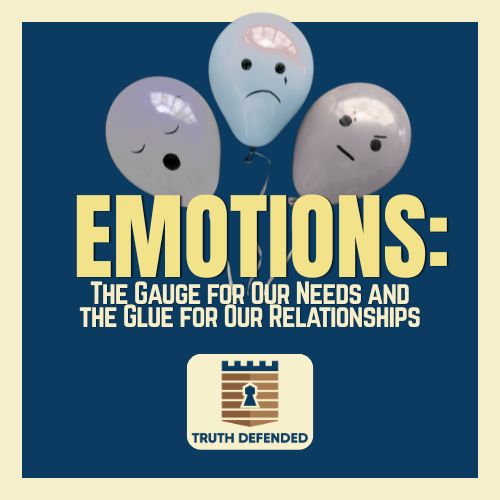
In American culture, it is remarkably easy to display a full spectrum of passion during a sports game. We go to the arena or stadium, or watch on our big screens, whatever sport is in season, and we get excited. We fluctuate between the roar of enthusiasm when our team scores, the heat of anger at a missed play, and the cold indifference toward any team succeeding that isn’t “ours.”
Yet, put that same person in a church pew, and they often become a stoic, non-emotional creature—a fish out of water. They may lip-sync the hymns, but their hearts aren’t fully committed to the songs. They may or may not even appear to participate in the singing at church. Why is the average attendee often passionate from Monday to Saturday, but passive on Sunday? It isn’t necessarily their fault; many have been trained for centuries by denominations and church cultures that stifle emotion and discourage expressive worship. While reverence is vital, a total lack of emotion hinders spiritual growth and prevents the excitement of the Gospel from spreading to others.
Poured Out and Present
King David was no dispassionate man. In Psalm 62:8, he encourages us: “Trust in him at all times; ye people, pour out your heart before him: God is a refuge for us.” To “pour out” requires an opening—a transparency of soul.
Similarly, Paul instructed the Roman believers to be emotionally present: “Rejoice with them that do rejoice, and weep with them that weep” (Romans 12:15). When we gather for worship, we are celebrating a resurrected King, not attending a funeral. Feelings are a gift from God, and denying them limits God’s work in our lives.
Emotions as a Spiritual Gauge
What are your spiritual needs right now? If you struggle to list them, look at your emotional state. Emotions are windows to the soul; if you suppress them, you cannot properly address your spirit. God created us as a triune being: body, soul (mind), and spirit (where emotions often manifest). To be whole, we must interpret our feelings through the Truth of God’s Word.
- Tears & Laughter: Both are medicinal. “A merry heart doeth good like a medicine: but a broken spirit drieth the bones” (Proverbs 17:22).
- Anger & Excitement: These are powerful energies that must be channeled toward God’s purposes rather than mere entertainment or preferences.
- Love: It is both a choice and a growing affection and loyalty to our forever-loving God.
The Relational Glue
David praised God with his “whole heart” (Psalm 9:1). When emotion is applied to our spiritual disciplines, it acts as the “glue” that binds us to God and one another.
1. Facts Trump Feelings
Our security rests on the fact of the Gospel. If you have believed in Jesus, you are saved. On days when you don’t “feel” saved, your faith must lean on the unchanging fact of His promises.
2. Whole-Hearted Worship
David projected his voice with “effort and skill” (Psalm 28:7). Worship should not be a passive observation but an enthusiastic participation of the heart.
3. Physical Expression
Paul told Timothy to lift “holy hands” in prayer (1 Timothy 2:8). The posture of the body often reflects and directs the posture of the heart:
- Praise (Halal): In early Hebrew, the root for “praise” contains symbols of uplifted hands. While nasah means to physically raise something, David used this action as a spiritual reaching (Psalm 63:4).[1]
- Worship (Sachah): This means to physically bow down or prostrate oneself.[2] Whether kneeling or bowing your head, it is a physical act of humility before a superior Monarch (Psalm 95:6).
4. The Motion of Emotion
There is rarely motion without emotion. Nehemiah was “pained” in his heart, which moved him to rebuild the city walls of Jerusalem (Nehemiah 1:3-4). Likewise, 2 Corinthians 9:7 tells us God loves a cheerful giver. Generosity is the emotional motivation to help others for God’s glory.
Love as a Lifelong Choice
In human relationships, “falling in love” is a natural overflow of emotion. Shakespeare famously noted in The Merchant of Venice that “love is blind and lovers cannot see the pretty follies that themselves commit.” This “blindness” allows us to overlook minor flaws in the beginning.
However, as the “rose-colored glasses” fade, love must move from a feeling to a choice. When love feels like it is fading, we choose to keep loving our spouse despite their flaws. This choice deepens the original emotion into a committed, lifelong “glue.” As Solomon wrote: “Hatred stirreth up strifes: but love covereth all sins” (Proverbs 10:12).
This is not about dismissing sin or enduring abuse, but understanding that a committed love overcomes difficulties—just as God’s love for us overcomes our own sin.
Take a moment to gauge your spiritual needs by examining your emotions. Ask yourself the following assessment questions:
Spiritual Emotional Assessment
Current State
- The Immediate Check-in: What is the primary emotion I am carrying in my body right now (tension, lightness, heaviness)?
- The Source of Joy: What recent moment made me feel most “alive” or connected to God, and why?
- The Root of Sorrow: When I feel sad or upset, is it because of a perceived loss, a disappointment in myself, or a fear of the future?
Triggers & Reactions
- The Anger Audit: When I feel anger rising, what “right” or “expectation” do I feel is being violated?
- The Indifference Mirror: In what areas of my life have I “checked out” or stopped caring as a way to protect myself from pain?
- The Shame Signal: Do I currently feel the need to hide a certain part of my day or my thoughts from others or from God?
Spiritual Connection
- The Posture of Praise: Using the concept of Yadah, am I finding it difficult to “lift my hands” or be open with God right now? What is weighing them down?
- The Voice of Truth: What is the “name” I am calling myself today (e.g., “failure,” “unworthy,” “beloved”), and does it match what God says in Romans 6:14?
- The Resistance Point: Where am I feeling the most “friction” or resistance in my spiritual life this week?
- The Invitation: If I were to stand completely transparent before God right now, what is the one thing I most need Him to say to me?
The Relational Glue Inventory
This assessment below is designed to help you evaluate how your internal emotions translate into external “motion”—both in your walk with God and your connections with others. Use these 10 questions to bridge the gap between what you feel and how you act, using the “glue” of biblical praise, worship, and commitment.
Part 1: The Vertical Glue (Your Relationship with God)
1. The Fact vs. Feeling Filter When you don’t feel saved or close to God, do you allow those emotions to dictate your security, or do you consciously “trump” them with the factual promise of your salvation in Jesus?
2. The “Whole Heart” Gauge: In a corporate setting like church, is your worship marked by the “enthusiasm, effort, and skill” described in Psalm 28:7, or are you holding back parts of your heart from the song?
3. The Posture of Halal (Praise): Since Halal symbolizes lifted hands (1 Timothy 2:8), is your physical posture in prayer reflective of a heart that is open and “reaching” toward God, or is it closed off?
4. The Posture of Sachah (Worship): Worship involves Sachah—bowing down or kneeling in humility (Psalm 95:6). When was the last time you physically or spiritually “prostrated” yourself to acknowledge God as your superior?
5. The Child-Like Anticipation: Like a child lifting hands to a parent, are you approaching God with “open hands” to receive, or are your hands “clenched” around your own plans and anxieties?
Part 2: The Horizontal Glue (Your Relationship with Others)
6. The “Motion” of Emotion: It is said there is “no emotion without motion.” Looking at Nehemiah’s example, has your compassion for someone else’s struggle recently moved you to actual physical help or generosity?
7. The Generosity Pulse: According to 2 Corinthians 9:7, God loves a cheerful giver. When you give of your time or money, are you doing it “grudgingly/out of necessity,” or is it motivated by a genuine emotional love for others?
8. The “Blindness” of Grace: Shakespeare noted that “Love is blind” to the “pretty follies” of others. Are you currently choosing to be “blind” to a loved one’s shortcomings, or are you focused on their flaws?
9. The Choice of Commitment: When the “rose-colored glasses” fade in your marriage or friendships, do you rely on the initial “spark,” or do you consciously apply the “relational glue” of choosing to love despite the bumps in the road?
10. The Passion Transparency: Are you willing to let others see that you are passionate about God? Does your “relational glue” show up as a visible, infectious love that others can observe in your daily life?
IF THIS OR ANY OTHER ARTICLE IS A BLESSING TO YOU, PLEASE LEAVE A POSITIVE REVIEW AND SHARE WITH OTHERS.
[1] https://atfotc.com/word-pictures-in-the-ancient-script/
[2] Francis Brown, Samuel Rolles Driver, and Charles Augustus Briggs, Enhanced Brown-Driver-Briggs Hebrew and English Lexicon (Oxford: Clarendon Press, 1977), 1005.

Leave a Reply